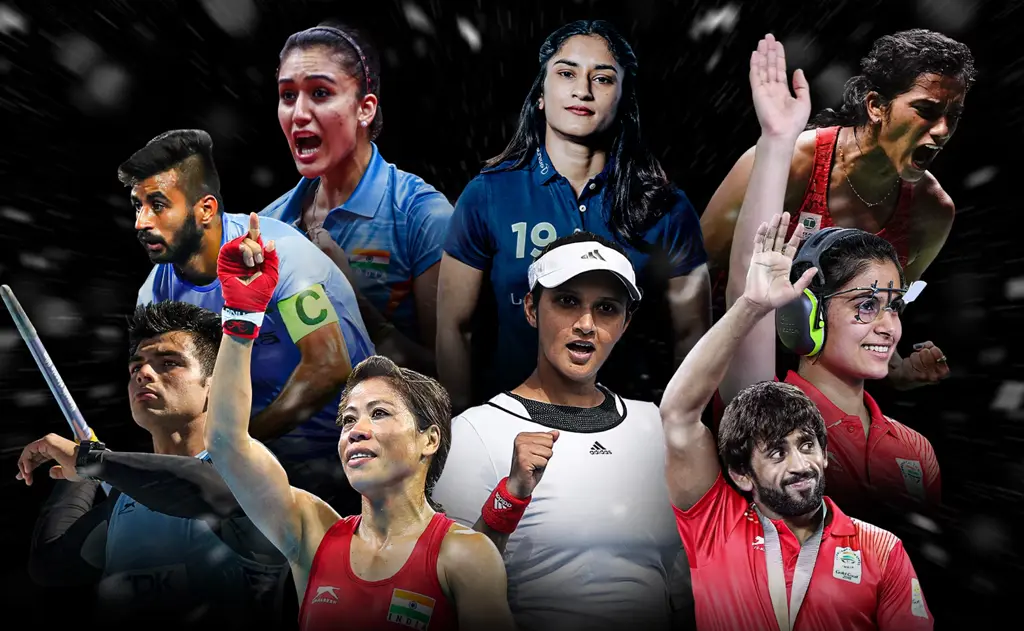
India is home to 1.4 billion people.
At the 2024 Paris Olympics, India won six medals.
That number is not a reflection of how much talent exists in this country. It is a reflection of how much of that talent receives the structured, sustained, institutional support required to compete at the highest level in the world. The gap between India’s sporting potential and India’s Olympic performance is not a talent gap. It is a systems gap.
And systems can be built.
The Numbers Tell a Partial Story
Medal tallies are the most visible measure of Olympic performance, but they are also the most misleading.
They tell you where a country finished. They do not tell you how many athletes came close and fell short due to insufficient preparation infrastructure. They do not tell you how many promising careers ended early because funding ran out, mentorship was unavailable, or the transition from junior to senior competition was never properly supported. They do not tell you how many athletes in rural India never made it to a national selection camp because no one came looking.
The medal count is the final frame of a very long film. To understand what is actually happening in Indian sport and what needs to change, you have to watch the whole film. You have to go back to the beginning.
Where the Gap Actually Lives
The structural challenges facing Indian sport are well documented. Funding that is concentrated at the elite end of the performance curve, leaving grassroots development chronically under-resourced. A coaching pipeline that produces too few qualified professionals to meet the development needs of a country this size. Selection and competition pathways that are inconsistent across states and disciplines. Limited career visibility for athletes beyond their competitive years, which discourages long-term commitment to sport as a profession.
None of these are new observations. What is less commonly discussed is where the leverage points are, the places where targeted, structured intervention can produce the most significant long-term impact.
The answer, consistently, is early.
The athletes who reach the Olympic podium are almost never the ones who received support only after they were already exceptional. They are the ones whose potential was identified early, whose development was structured from the beginning, and whose journey was supported by people and institutions that remained invested through the difficult middle years, not just the visible final ones.
The Olympic Disciplines That Represent India's Greatest Opportunity
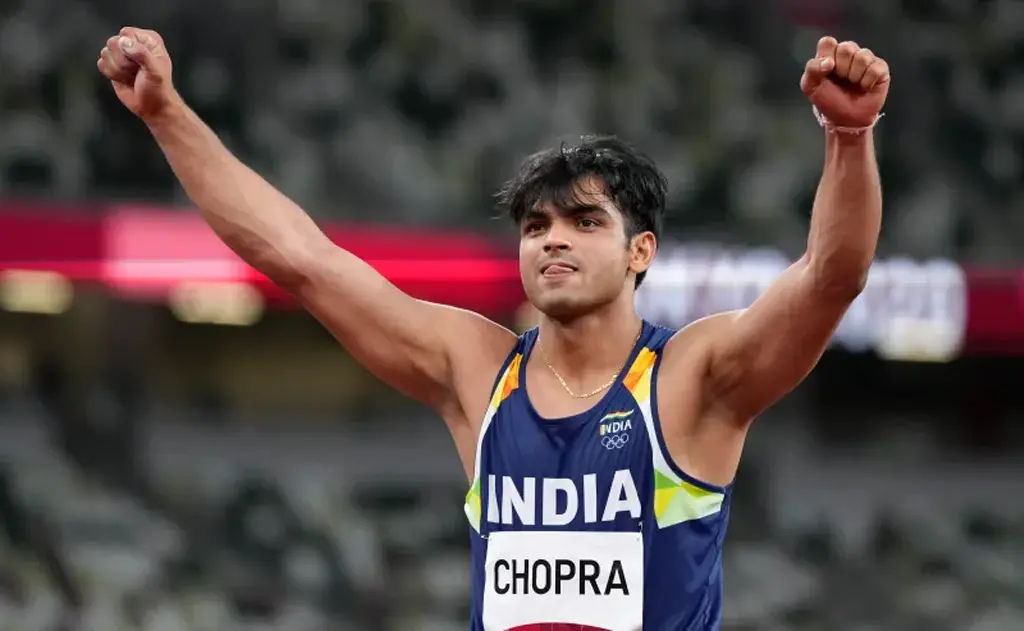
India’s Olympic medal history is concentrated in a small number of disciplines: shooting, wrestling, badminton, boxing, and most recently, athletics through Neeraj Chopra’s historic javelin gold at Tokyo 2020.
What these disciplines share is instructive. Each has a relatively established domestic competition structure. Each has produced coaches and mentors who have themselves competed at high levels. And each has benefited from at least some period of concentrated institutional investment, whether through government schemes, private foundations, or the athletes’ own determination to build the infrastructure around themselves when none existed.
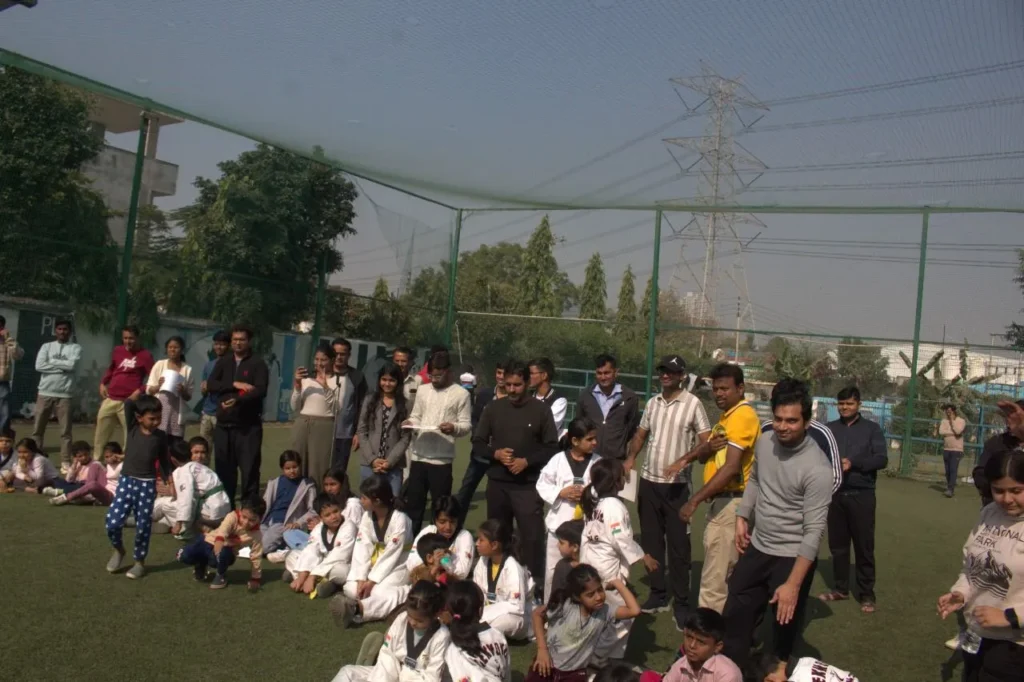
Taekwondo represents one of India’s clearest emerging opportunities in Olympic combat sport. It is a discipline with a growing global competition structure, strong youth participation, and a technical profile that rewards the kind of disciplined, systematic preparation that Indian athletes are demonstrably capable of when the right environment is provided.
Peace Sports Foundation’s primary focus on Taekwondo is deliberate. It is not a peripheral discipline. It is an Olympic sport with a clear pathway to the podium, provided the development infrastructure is built correctly and sustained over time.
What the 2028 Los Angeles Olympics Represents
The 2028 Los Angeles Games are not far away.
For athletes currently in development, in their mid-teens, training consistently, working with qualified coaches, Los Angeles is a realistic target. Not a distant aspiration, but a concrete deadline that shapes every training decision, every programme design, every institutional investment made today.
PSF’s programmes are built backward from that deadline. The question we ask is not what an athlete can achieve right now, but what they need to be doing right now in order to be competitive in 2028. That question produces a very different kind of development programme than one built around immediate results and short-term visibility.
The 2032 Brisbane Games represent the medium-term target, the cycle in which the athletes currently entering PSF’s grassroots programmes through PSF Aarambh could realistically compete at the highest level, if their development is structured and sustained correctly over the next six to seven years.
These are not arbitrary targets. They are the organising logic of everything PSF builds.
The Role of Foundations in Closing the Gap
Government investment in sport is essential and irreplaceable. But it is not sufficient on its own, particularly at the grassroots and development levels where the foundations of Olympic performance are actually laid.
Foundations, CSR partners, and private institutional investors play a specific and critical role in the Indian sports ecosystem. They can move faster than government programmes. They can reach athletes in geographies and communities that fall outside mainstream talent identification systems. They can sustain investment through the long, unglamorous development years when results are not yet visible but the work is most consequential.
They can also do something that is harder for government schemes to do: build the human infrastructure of sport. Coaches, mentors, officials, administrators, and support professionals whose work enables athletic excellence but whose own development is rarely the focus of institutional investment.
This is the space Peace Sports Foundation occupies. Not in competition with government programmes, but in complement to them, filling the structural gaps that leave talent undeveloped, careers unsupported, and potential unrealised.
What Needs to Happen Next
Closing the gap between India’s sporting potential and its Olympic performance requires a long-term commitment to building systems, not a short-term response to results.
It requires talent identification that reaches beyond urban centres and established academies into the rural geographies where a significant proportion of India’s athletic potential currently exists without access to structured development.
It requires coaching infrastructure that trains and supports coaches as professionals, not as informal extensions of athletic careers.
It requires competition pathways that give developing athletes meaningful competitive experience at the right levels, at the right times in their development.
And it requires institutional patience, the willingness to invest in development processes whose results will be visible not in the next season, but in the next Olympic cycle.
India has the talent. The question has always been whether we build the systems to develop it. At Peace Sports Foundation, that question is our daily work.
The 2028 Countdown Has Already Started
Every day of preparation counts.
The athletes who will represent India in Los Angeles are training right now. Some of them are in established programmes with full institutional support. Others are in communities where their potential has been noticed but not yet channelled into a structured development pathway.
The work of Peace Sports Foundation is to find both groups and to build the systems that give every committed, talented individual in Indian sport a genuine pathway to the highest stage in the world.
The medal is the destination. The pathway is what we build.
Great advice! Getting a professional cleaning before moving in is such a smart move. It’s definitely worth the investment for a fresh start in a new home.