
We are very good at recording the wrong numbers.
We record final scores. We record medal tallies. We record personal bests and national rankings. We record the moment an athlete breaks a record and the number of seconds or centimetres by which they broke it.
What we rarely record is everything that came before.
The age at which a coach first noticed something worth developing. The number of years between first training session and first national competition. The number of setbacks absorbed between junior success and senior performance. The number of people involved in a development journey that gets attributed, in the end, to a single individual standing on a podium.
At Peace Sports Foundation, we believe those numbers matter. Not instead of results, but alongside them. Because those are the numbers that tell us what sporting excellence actually costs, what it actually requires, and what kind of institutional investment is needed to produce it consistently.
The Numbers We Do Not Track
Consider what a standard sports profile looks like.
Name. Age. Discipline. National ranking. Competition results. Personal best. Achievements.
Now consider what is missing from that profile.
Age at first structured training. Number of coaches worked with before reaching competitive level. Number of competitions entered before first significant result. Geographic distance travelled regularly for training. Financial investment made by the family. Academic sacrifices made to accommodate training schedules. Number of times the athlete considered stopping and chose not to.
These are not soft, unmeasurable things. They are data points. They are the inputs that produce the outputs we celebrate. And in Indian sport, they are almost never systematically recorded, studied, or used to inform how we design development programmes.
This is a significant gap. Not a sentimental one, but a practical one. If we do not understand what the development journey actually looks like for athletes who reach high performance, we cannot design systems that reliably produce more of them.
What the Records Actually Tell Us
India has produced remarkable sporting performances across disciplines. Each of those performances has a development history that, if studied carefully, reveals consistent patterns.
Elite athletes in India typically begin structured training between the ages of eight and fourteen, depending on the discipline. The period between first structured training and first national-level competitive result is rarely less than five years and frequently closer to eight to ten. The athletes who sustain long careers are almost always the ones who had consistent coaching relationships, not just training access. And the ones who transition successfully into post-competition roles within sport are the ones whose development included mentorship that extended beyond technical skill into professional identity and career planning.
These patterns are not surprising. They align with what sports science and long-term athlete development research consistently shows across global contexts. What is surprising is how rarely these patterns inform the design of development programmes in India, where short-term results and immediate visibility continue to drive most institutional investment decisions.
Records as a Development Tool
At PSF, we are building a different kind of record-keeping.
For every athlete who enters the PSF ecosystem through PSF Aarambh, we document the starting point. Not just their technical level at assessment, but their background, their access to prior training, their family context, their geographic location, and their own articulation of their sporting goals.
As athletes progress through PSF Nirmaan, we track development against structured benchmarks. Not only competition results, but technical progression, physical development, mental resilience indicators, and the quality of the coaching relationship. These records are not stored and forgotten. They are reviewed regularly and used to adapt the development plan.
For coaches progressing through PSF Margdarshan, we document professional development milestones, the athletes they have worked with, and the outcomes those athletes achieve. This creates a record of coaching impact that goes beyond the credentials on a certificate.
And for athletes transitioning through PSF Pathways, we track career progression within the ecosystem, noting the roles individuals move into and the contribution they make to Indian sport beyond their competitive years.
This is not bureaucracy. It is the institutional memory that allows a development system to learn, improve, and eventually produce results that a system without that memory cannot.
The Record That Matters Most
There is one number that Peace Sports Foundation tracks above all others.
It is not a ranking. It is not a medal count. It is not a programme enrolment figure.
It is the number of individuals whose relationship with sport did not end when their competitive career did.
Every athlete who transitions into a coaching role carries forward years of technical knowledge and lived experience that can shape the next generation of competitors. Every official who develops their expertise within a structured professional pathway strengthens the ecosystem that makes competition possible. Every sports administrator who builds institutional capacity within Indian sport creates the conditions for more athletes to succeed.
These are the records that compound over time. The coach who develops an Olympic athlete who goes on to coach another Olympic athlete. The official whose expertise raises the standard of competition across a region. The administrator who builds a system that outlasts any individual within it.
These are not the numbers that appear in medal tallies or sporting databases. But they are the numbers that determine, over the long term, whether India builds a sporting ecosystem that consistently produces excellence, or one that continues to celebrate exceptional individuals against a backdrop of structural underinvestment.
Why This Matters Now
India is at a genuinely important moment in its sporting development.
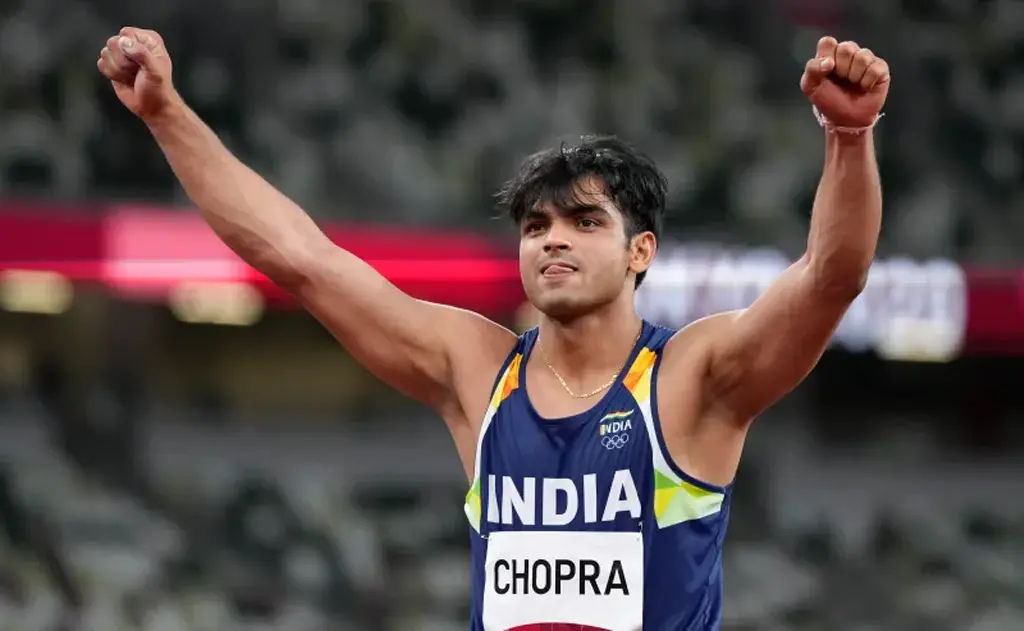
The success of athletes like Neeraj Chopra has demonstrated what is possible when talent meets structured, sustained support. The growing public interest in Olympic sport, the increasing willingness of corporate India to invest in sport through CSR channels, and the policy attention being given to grassroots development all create conditions that did not exist a decade ago.
The question is whether the institutions being built right now, in this moment, are designed to take full advantage of those conditions. Whether they are building the systems, the records, the institutional memory, and the long-term development infrastructure that will allow this moment of momentum to produce lasting results.
At Peace Sports Foundation, that is exactly what we are trying to build. Not a programme that produces results for one Olympic cycle and then fades. A system that learns from every athlete it works with, improves with every coaching relationship it builds, and compounds in impact over every year that it operates.
The numbers we track today are the foundation of the records we will be proud of tomorrow.
A Final Number
17th December 2025.
That is the date Peace Sports Foundation was formally incorporated.
It is a small number in the context of Indian sporting history. But it is the starting point of a record we intend to build carefully, honestly, and with full documentation of every step along the way.
Because we believe the journey deserves to be remembered. Not just the destination.
Excellent article! Another great eco-friendly cleaning option is to make your own all-purpose cleaner with vinegar, water, and essential oils. It’s super cheap and effective!